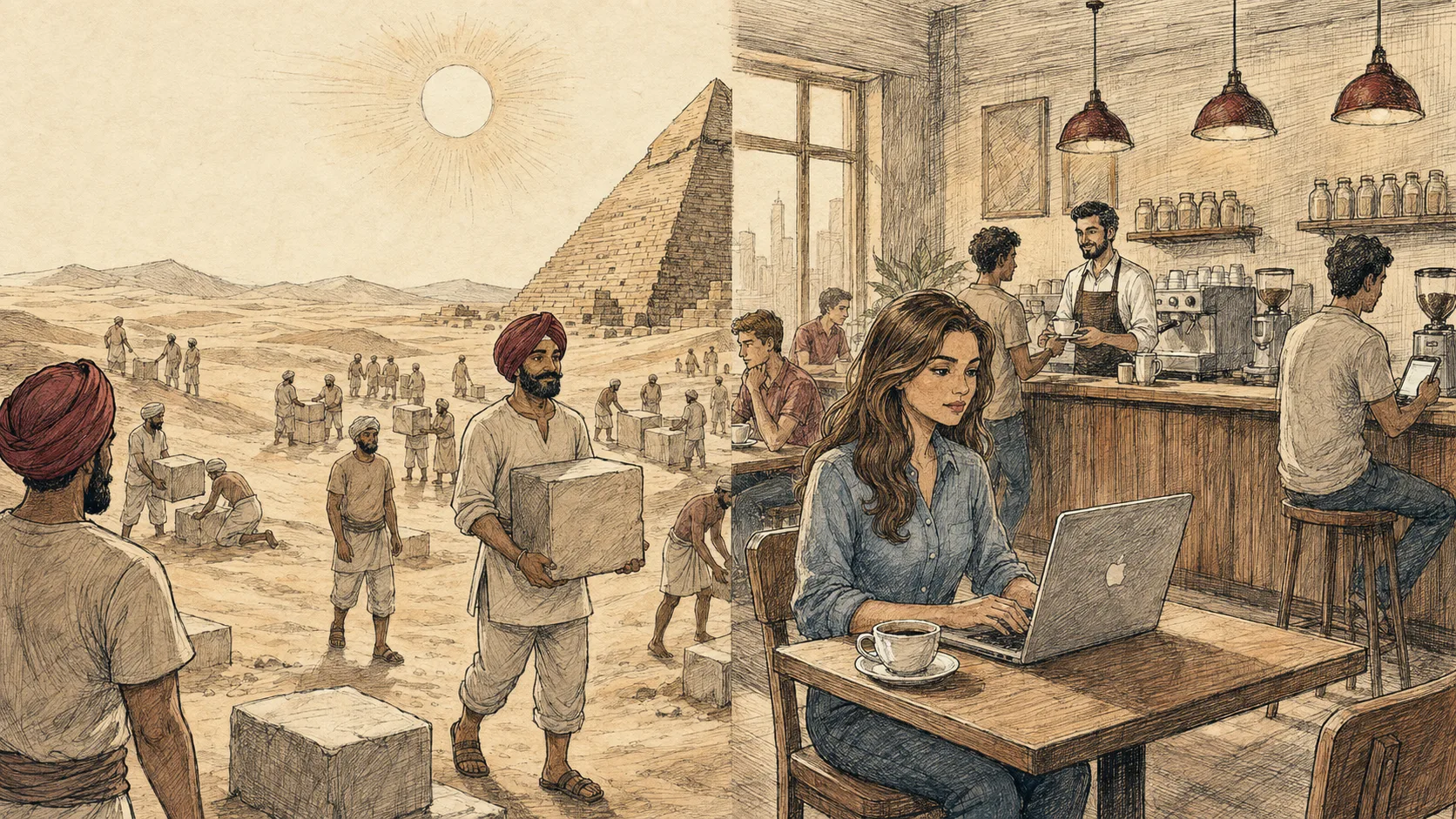
The Fable : The Pyramid of the Free
Long ago, a king ruled a vast desert kingdom and forced slaves to build his great pyramid. One night, his spies warned him: the slaves were plotting an uprising. Furious, the king prepared to crush them.
But his clever minister whispered a different plan.
The next morning, the king surprised them all. He stood before the laborers and declared, "You are free. For your generations of service, not only will I free you—I will offer honest work. One stone carried, one coin earned."
The slaves were stunned. But the next day, one returned to lift a stone. Then another. And another.
No whips. No chains. Just work.
And so, the pyramid rose once more—not under tyranny, but choice. They are still building it.
The Mirror
This story is not a critique of labor; it is a mirror.
We live in an era of "freedom." We celebrate the gig economy, the "hustle," and the decentralized workforce. But in a time of algorithmic nudges and economic precarity masked as autonomy, we must ask the uncomfortable question:
Are we carrying stones we chose—or ones that were chosen for us?
Is independence merely a shifting architecture of consent?
As we celebrate freedoms, we might also reflect on the systems that shape our sense of what's possible. Sometimes the most invisible chains are the ones we wrap in the language of progress or freedom.