The Displacement of Search
My first job out of grad school was as a technology architect at a School of Journalism in the American South. Back then, a quiet war was brewing. Traditionalists defended the sanctity of reporting, while modernists chased the bleeding edge of the web. While they debated, the real disruption was already underway: Google was displacing journalism's role in sense-making.
Today, we are watching that disruption repeat—this time with search itself under siege.
According to Evercore, ChatGPT usage as a primary search tool in the U.S. leapt from 1% to 8% in less than a year, while Google's share dropped to 74%. Gartner predicts that by 2026, traditional search volume will decline by 25% as users flock to chatbots.
But this isn't just about market share. It is about who gets to define "truth."
The Oracle Problem
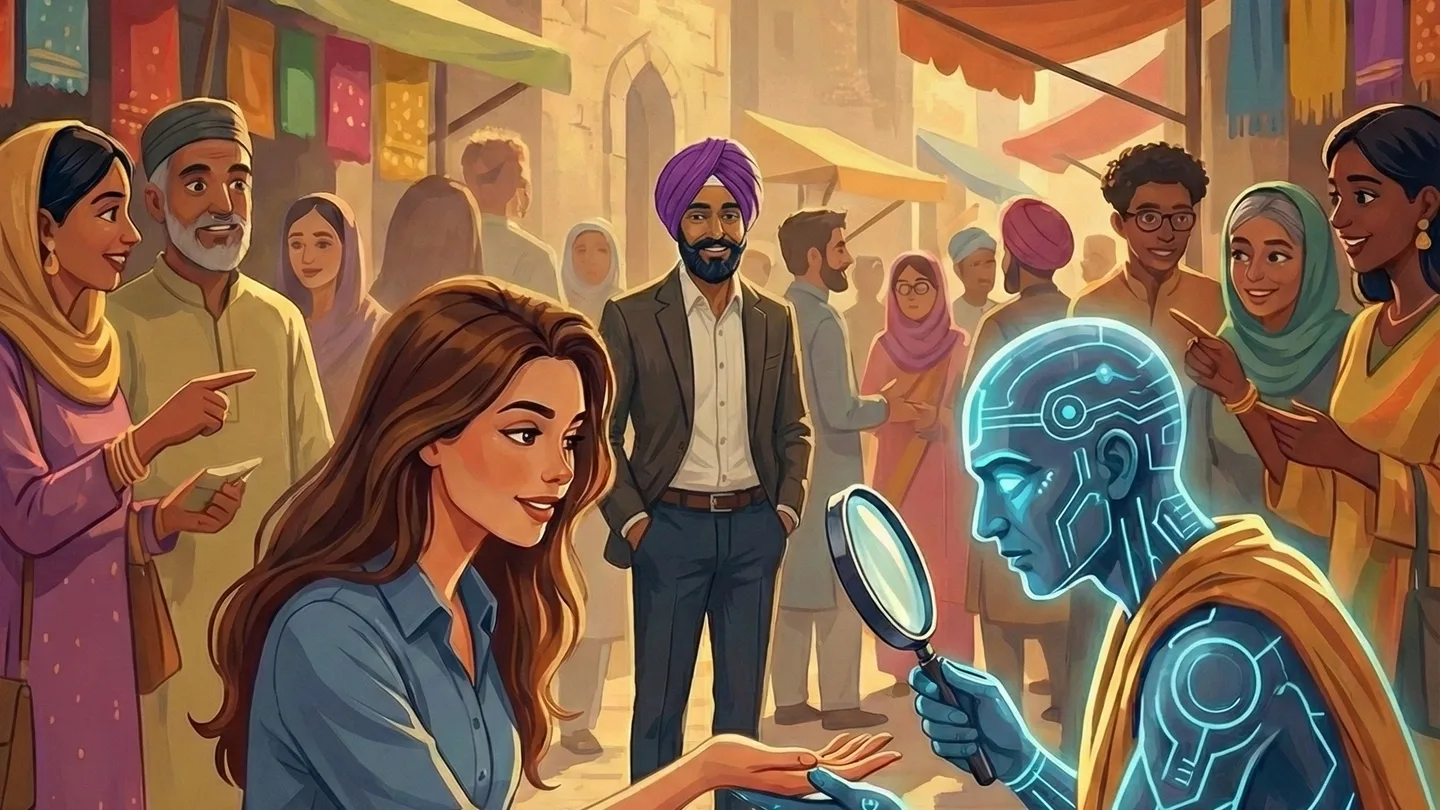
Search engines offered a library of links; the user had to do the work of synthesis. LLMs offer a single answer. They are not just tools; they are becoming Oracles. The race to dominate AI is really a race to become the voice most believed.
But this isn’t just about market share. It’s about who gets to define “truth” in the digital age. LLMs aren’t just tools—they’re becoming oracles while cannibalizing the web as we know it. And the race to dominate AI is really a race to become the voice most believed.
Truth as a Commodity
In this era, truth is too often traded for clout. Both the Global North and Global South are engaged in a battle—not for objective reality—but to canonize their own version of it. Consider the contradictions we witnessed in a single week:
- The Culture War: Miss England withdrew from the Miss World pageant decrying objectification, while "allies" paradoxically defended the institution.
- The Economic Narrative: India celebrated overtaking Japan's GDP with exuberance, while glossing over the per capita disparity ($2,800 vs Japan's $34,000).
Platforms rife with objectification shelter behind the banner of free speech, while genuine dissent remains quietly suppressed across both hemispheres.
The Simulation of Emotion
As models like Google's Veo 3 enter the fray, we enter even murkier waters. We are moving from the simulation of text to the simulation of feeling.
"Can a generation raised on screens still distinguish between emotions felt and emotions rendered? Between the raw, unfiltered beauty of human vulnerability and a high-definition simulation tailored by algorithms trained on patterns of attention?"
When pixels can mimic pain and code can imitate connection, we must ask: where does humanity end and computation begin? And perhaps more importantly—will we notice the difference?