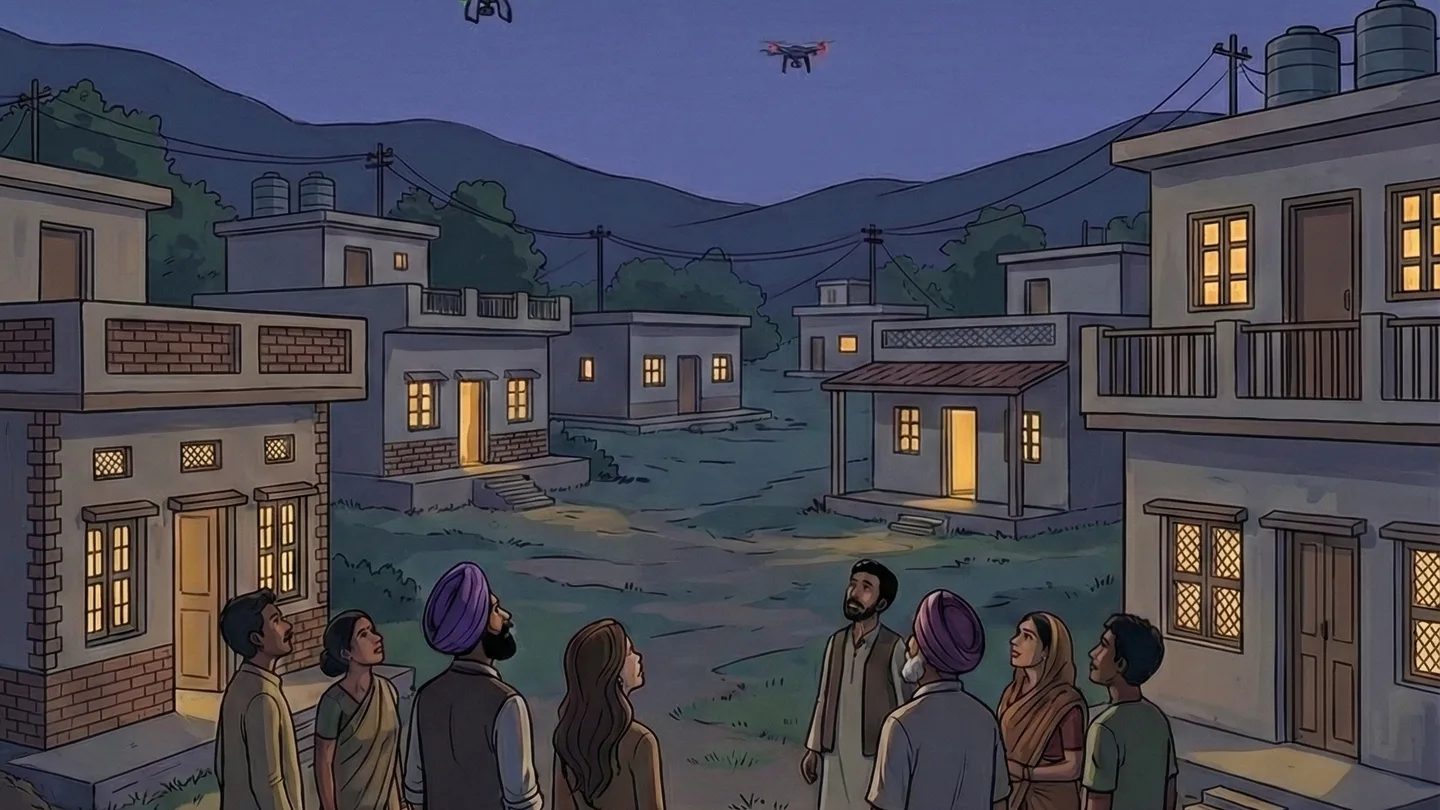
Last week, the world came dangerously close to the brink of nuclear confrontation — arguably the most serious escalation between two nuclear-armed neighbors since the Cuban Missile Crisis. For many of us, including my extended family near the Indo-Pak border, it wasn't just a headline. Drones and counter-missiles flew over our villages, and fear became tangible.
"In this age, the battlefield is no longer just physical. As truth became the first casualty, this conflict unfolded across multiple fronts — cyber, narrative warfare, social media psyops, infrastructure sabotage, surveillance, space, and systems. These dimensions now define modern warfare, and our understanding of security must evolve accordingly."
Drinking from the Firehose
This moment presents both urgency and opportunity. The abrogation of the Indus Waters Treaty by India following the Pahalgam attack became a flashpoint. This highlights a critical, often overlooked dimension of modern conflict: the digital transformation of water sustainability. As water shortages brew wars, the management of these resources is moving from environmental policy to defense strategy.
Equally critical is the architecture of belief during conflict. While the U.S. brokered a kinetic ceasefire, the digital domain saw no de-escalation. Algorithmic narrative engines allowed both nations to construct divergent realities, claiming victory while keeping their respective citizens trapped in psychosocial feedback loops.
As debris from downed drones and jets landed in civilian zones, AI agents were deployed by everyday netizens to identify parts — a stunning, if eerie, parsing into decentralized defense intelligence. This begs a question: Could blockchain-powered, publicly accessible arms supply chains ever be used to prevent proxy escalation through transparency? The vision feels idealistic — but it's a powerful utility case nonetheless.